Thursday, April 30, 2015

Contribute Your Media Literacy Video Suggestions

I invite you to contribute to a web page I started some time and have recently revised:
Videos Used In Teaching Media Literacy

Each of the categories contained on that URL include links to videos that can be used to teach elements of media literacy.

If you have suggestions for videos you use, or have produced, please send them to me (fbaker1346@aol.com) in THIS format:

TITLE (Hyperlinked) followed by LENGTH

THANKS.

Frank Baker

Monday, March 2, 2015

How do filmmakers use STEAM? Here is how.

Many media educators teach with and about media production, including film. But how many educators actually know how filmmakers utilize concepts in science, technology, engineering, arts and math?  That's the question I sought to answer as I began to create this new web page.  Comments, suggestions and additions welcome.

Tuesday, February 10, 2015

5 Ideas for Teaching Literary Analysis With Film

Critiquing movies allows students to develop skills in literary analysis by deconstructing a work, finding evidence to support their critique and organizing their thoughts in a final analysis, middle-grades educator Heather Wolpert-Gawron writes in this blog post. She shares five project ideas -- incorporating the work of film critic Roger Ebert -- for using film criticism when teaching literary analysis.

Monday, February 9, 2015

Fair Use for the Visual Arts (New Report)

The Code of Best Practices in Fair Use for the Visual Arts is based on a consensus of professionals in the visual arts who use copyrighted images, texts, and other materials in their creative and scholarly work and who, through discussion groups, identified best practices for using such materials. They included art and architectural historians, artists, designers, curators, museum directors, educators, rights and reproduction officers, and editors at scholarly publishers and journals.

Monday, December 29, 2014

Cracking the Sitcom Code

"Cracking the Sitcom Code", an essay in The Atlantic online, is must reading for teachers (and students) of this popular media genre. 

Excerpt: " From The Simpsons to Seinfeld, from Everybody Loves Raymond to Everybody Hates Chris, from Taxi to Arrested Development to Parks & Recreation, there is a highly-specific, minute-by-minute recipe used to write the vast majority of sitcoms out there. And once you know the formula, it makes it much easier to write them, and much harder to watch them without seeing that formula—the “sitcom code”—everywhere you look."

Sunday, December 21, 2014

TV Special Features Creative Process of Producing TV Sitcoms

"Now That’s Funny! On Set with TV’s Hottest Comedies: A Paley Center for Media Special,” airs on the CBS Television Network on Friday, December 26 at 8:00pm ET (check your local listings).  This one-of-a-kind program will give viewers a look inside the intricate process of getting television’s funniest shows on the air each week. From the brainstorming in the writers room, to the informal hilarity of the table read, to the energy and spontaneity of the actual performance, audiences will see how their favorite shows continue to keep fans laughing. 

Saturday, December 20, 2014

Writers Speak To Kids (Videos)

In this NBC Learn special collection, Writers Speak to Kids, children‘s book authors share their writing experiences to help students learn more about the craft and techniques of creative writing. 

Thursday, November 27, 2014

Buzzworthy/Award Film Screenplays Appear Online

Last week's issue of The Hollywood Reporter contains the first "For Your Consideration" ads, as it is the start of the film screening/nomination process. And it's not just the Academy Awards that the film studios are advertising to. It's also the Director's Guild, the Cinematography Guild and all of the others.
So the November 14 issue was wrapped with the ad for "How to Train Your Dragon 2" which contains this URL:  http://dwaawards.com/

Another ad for "The BoxTrolls" urges readers to go to:  www.FocusGuilds2014.com
(The screenplays for "Theory of Everything", "BoxTrolls" ,"Kills The Messenger:", "Bad Words", and "Wish I Was There" can be found there)

Speaking of writing, THR starts their season of roundtable discussions/videos in this issue with writers:
http://www.hollywoodreporter.com/news/writer-roundtable-chris-rock-...
 
This issue also features a the making of featured on "The Imitation Game"


It’s that time of year again when studios make available PDFs of movie scripts for award season. As in years past,GoIntoTheStory is tracking them and posting links as they become available.
Current total of 2014 scripts for download: 7.
Newly added script in bold below:
Get On Up (Universal Pictures)
Gone Girl (20th Century Fox)
How To Train Your Dragon 2 (DreamWorks Animation)
St. Vincent (The Weinstein Company)
The Boxtrolls (Focus Features)
The Fault In Our Stars (20th Century Fox)
The Theory of Everything (Focus Features)
Studios also make production notes available:

Monday, November 17, 2014

Bring History, Journalism and the First Amendment to Life

The Newseum in Washington, D.C., now offers a Digital Classroom with high-quality, standards-based, document-driven instruction. Focused on historical inquirymedia literacycritical thinkingdocument analysis and civic engagement, Newseum Education’s Digital Classroom features a wide variety of engaging interactive content for middle school through college teaching and learning. A library of 12 captioned and beautifully produced video lessons, complete with viewing guidesessential questions and lesson plans, focus on critical media literacy issues such as Bias, Getting It Right (accuracy in media), What’s Newsand SourcesHistorical video lessons cover such topics as The Berlin Wall and the PressThe Press and the Civil Rights MovementWatergate and 45 Words (the First Amendment). Currently, three comprehensive modules aggregate a wealth of resources and activities. The latest addition, Women, Their Rights and Nothing Less, investigates the suffragists’ pioneering use of the free press and the other First Amendment freedoms. Students explore more than 250 primary sources in three interactives. Using aninteractive timeline and the map of persuasive materials, they see how and why movement participants dared to challenge the status quo. Then they discover their legacy in contemporary civil rights issues and build their own case for change today. A library of primary sources connects to each of the modules: 150 documents on Women’s RightsBlood and Ink: 30 Historic Front Pages from the Civil War andEmancipation Proclamation Front Pages. Documents may be downloaded freely as full-sized PDFs to facilitate examination by students. Activities connect to a variety of standards documents in language arts and social studies from middle school through high school.

Monday, November 10, 2014

CFP: News Literacy- Special Issue of Journalism Education

Call for Papers:

Exploring News Literacy:
Preparing future journalists—and citizens—for engagement in global digital culture

Special Issue of Journalism Education

Guest editors:
Paul Mihailidis, Emerson College, Boston, USA
Stephanie Craft, University of Illinois, USA


This special issue of Journalism Education is devoted to the emerging field of news literacy. It aims to provide new understanding, approaches, and foundations for how we understand the competencies that future journalists – professionals and citizens alike -- need to effectively report news stories that demand attention in digital culture today.

Contributions to this special issue will identify and critique a range of factors that are facing journalism and media educators. In recognizing the pedagogical challenges engendered by the destabilization of traditional models for news, this issue calls for theoretical treatments of the term ‘news literacy’ as a productive basis for rethinking media literacy and public engagement in civic life.

Research examining news literacy in primary, secondary or higher education contexts is welcome. Possible topics include:

  • How best to define news literacy?
  • News literacy as a response to a destabilizing industry
  • Evolving forms and practices of news media pedagogy
  • Students’ uses of social media for engagement with news
  • News literacy in connective networks and sharing culture
  • Training citizen journalists
  • Curation as news pedagogy
  • Storytelling as news literacy
  • Teaching reporting in an “everything is free” culture
  • How best to keep up with the changing demands for teaching about news and journalism?
  • Innovation and experimentation in news education in digital culture
  • Ethical responsibilities in producing, curating, disseminating and consuming news

Prospective authors should submit an abstract of approximately 250 words by email to Paul Mihailidis (paul_mihailidis@emerson.edu). Following peer-review, a selection of authors will be invited to submit a full paper in accordance with the journal’s ‘Instructions for authors.’ Please note acceptance of the abstract does not guarantee publication, given that all papers will be put though the journal’s peer review process.

Timeline
Deadline for abstracts: 15 December 2014; deadline for submission of full papers: 1 April 2015. Final revised papers due: 15 June 2015. Publication: Volume 9, Number 4 (September 2015).

Guest Editors
Paul Mihailidis is an Assistant Professor of Media Studies in the school of communication at Emerson College and Associate Director of Emerson’s Engagement Lab. He also Directs the Salzburg Academy on Media and Global Change. He newest book is titled Media Literacy and the Emerging Citizen: Youth, Engagement and Participation in Digital Culture (Peter Lang, 2014).

Stephanie Craft’s is an Associate Professor of Journalism in the College of Media at the University of Illinois. Her research, focusing on news literacy, press practices and journalism ethics, has appeared in Journalism & Mass Communication Quarterly, Journal of Mass Media Ethics, Communication Law & Policy, Mass Communication & Society, Journalism: Theory, Practice & Criticism, and Journalism & Mass Communication Educator. With Charles Davis, she is author of the textbook Principles of American Journalism, published by Routledge. Before earning a PhD, Craft worked as a newspaper journalist in California, Washington and Arkansas.


Editorial Contact
Paul Mihailidis
Emerson College
120 Boylston Street
Boston, MA 02116
tel: +001(978)761-2412

web: paulmihailidis.com

Tuesday, October 21, 2014

If you think film belongs only in ELA or the Arts– think again

Using film in the classroom isn’t a perk reserved for English and drama. Teacher Elizabeth Evans, writing in The Guardian, explores how science, geography and maths students can also benefit.

Sunday, October 19, 2014

Campaign Ads: Helping Students Find the Truth

If politicians have a “license to lie” in campaign advertising, how are our students to know who and what to believe? Critical thinking skills are paramount, says media literacy consultant Frank Baker, who shares insights and resources tied to Common Core and social studies standards.

Wednesday, October 1, 2014

The important role costume plays in the language of film

I've just written another essay about "close reading," "film analysis," and the important role costume design plays in films.  Common Core ELA makes several references to film in middle grades, so studying what a character wears might be relevant. (There are also a number of Read/Write/Think lessons related to costuming.)

I maintain a web page of teaching ideas and resources related to film costume on my Language of Film website.

Coincidentally, "Hollywood Costume"-- a major exhibition-- opens in early October in Los Angeles. 

And with the 75th anniversary of "Gone With The Wind" underway, there is a new exhibit in Austin Texas. There is also an excellent companion online resource "Producing Gone With The Wind," which details how the film came to be adapted from the popular Margaret Mitchell novel.

Wednesday, September 10, 2014

Resource: Picturing US History: Building visual literacy

Using photos, videos, and other types of images is one of the most effective ways to hook kids into your content. Images can create emotion, explain events, generate questions, and help solve problems.
But sometimes it can be difficult integrating visuals into your instruction. What images to use? What activities work best? How can you align these activities with national and state standards?
Picturing United States History: An Interactive Resource for Teaching with Visual Evidence can help. Created by the folks at the American Social History Project/Center for Media and Learning at the City University of New York Graduate Center with funding support from the National Endowment for the Humanities, the site is a digital project based on the belief that visual materials are vital to understanding the American past.

Sunday, August 24, 2014

Technology and Digital Media in the Early Years – A Textbook for 21st Century Educators

Here’s a look at this new book's contributors and their chapters. It’s a line-up of some of the most important thought leaders in the field of young children, media literacy and educational technology: - See more here

Thursday, August 21, 2014

NCTE 2014 Media Literacy Award Recipient Named

University of Buffalo (NY) Graduate School of Education doctoral student Denise Grandits, a middle school literature teacher in St. Amelia School in Tonawanda, is the latest recipient of the Media Literacy Award from the National Council of Teachers of English (NCTE).  Read more here.


Sunday, August 17, 2014

Close Reading of Media Texts

I've recently created this new website--which combines various resources for those educators who teach "close reading analysis" of media texts. The new page features essays I've written as well as resources from other reliable sources.

Wednesday, August 6, 2014

How to Close Read the Language of Film

When students are challenged to “close read” a movie, they must not only learn how to deconstruct the story, they must understand the many elements and techniques that are used by filmmakers to create the total effect, says expert Frank Baker, writng in this series about close reading for MiddleWeb.

Additionally, the Academy of Motion Pictures Arts & Sciences (AMPAS) offers educators these free, downloadable teacher guides which are excellent resources for introducing and reinforcing the "languages of film."

Tuesday, August 5, 2014

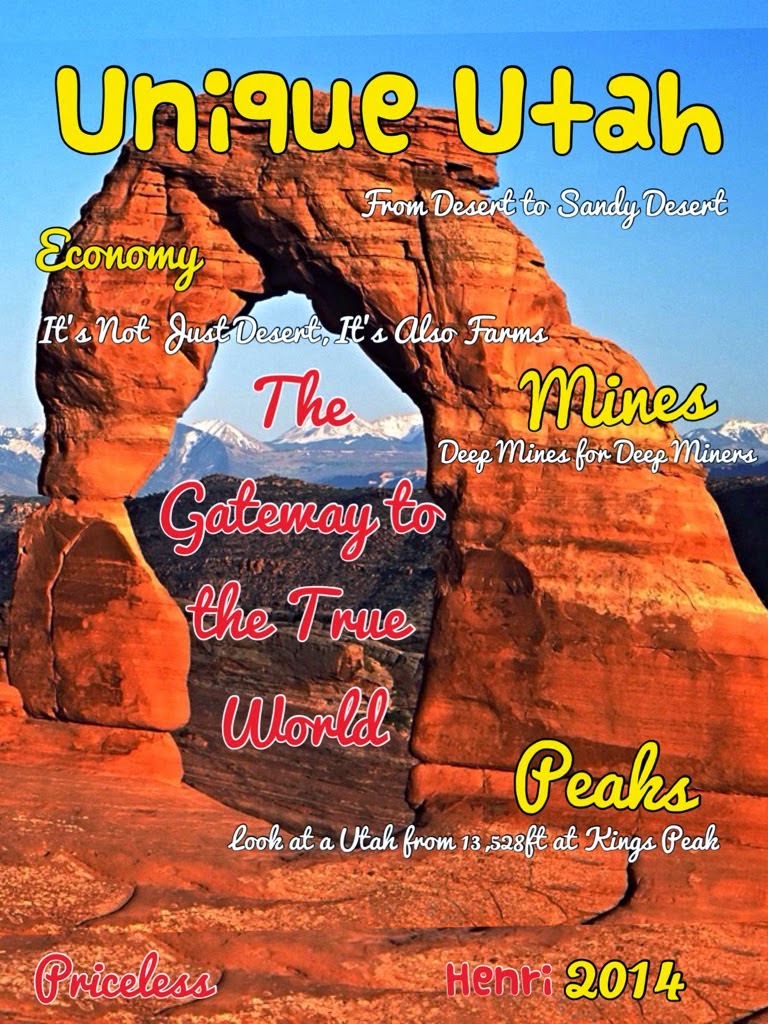
Fourth Graders Demonstrate Media Literacy & Graphicacy In Magazine Cover Production Activity

Every year our fourth graders complete a state project. Instead of doing the usual travel brochure or poster with their research, we decided to have them pitch their states by designing a travel magazine cover. It sounds simple, but it actually incorporated the skills of media literacy and graphicacy. On the one hand, it required them to think about the message, and on the other, to visually construct the design to sell it. More from the ASIDE blog.

Saturday, July 26, 2014

Resource: Powerful Voices for Kids


POWERFUL VOICES FOR KIDS is a free online resource that helps teacher educators introduce digital and media literacy to teachers in the elementary grades. Watch videos of classroom practice, see samples of student work, get lesson plans, and discuss strategies that help children build literacy, language, critical thinking, creative and collaborative skills by exploring mass media, popular culture and digital media tools and technologies.
IDEAS for exploring digital and media literacy in elementary school include: